

After the Fijian Ministry of Health and Medical Services (MHMS) declared an outbreak of HIV in Fiji in January of this year, the World Health Organization’s Global Outbreak Alert and Response Network (GOARN) put out a request for assistance to reinforce national HIV surveillance and epidemiological analysis.
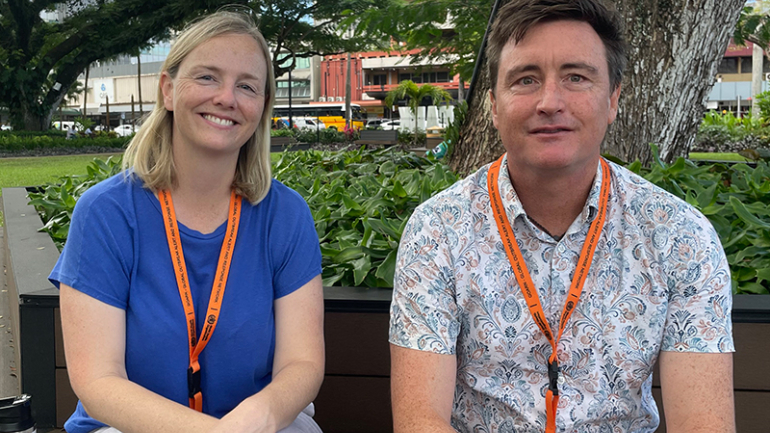
Kirby Institute epidemiologists Justine Marshall and Jonathan King responded to the request and were deployed to Fiji for six weeks to conduct a rapid assessment and build in-country surveillance and epidemiology capacity .
The dramatic increase in HIV cases in Fiji is a significant public health challenge that requires harm prevention strategies and timely and convenient access to HIV services for both diagnosis and treatment.
Dr King said that being on the ground was essential for building effective partnerships. “Responding to an HIV outbreak requires a collaborative approach across government, the private sector and non-governmental organisations. [Being in country means] you can be work directly with these partners to support meaningful change, including building local capacity” he said.
The first weeks of the deployment were spent visiting health facilities, observing and understanding how data collection was working as well as discussing opportunities for improvement with the national HIV program.
“I spent time with frontline clinicians to explain the value of a strong surveillance system and the crucial role that clinicians play in both providing data to the system and utilising its regular reports to guide their practice,” explains Ms Marshall.
Following the GOARN deployment, the Kirby Institute’s partnership with Fiji on HIV surveillance activities has continued and expanded with support from Australia’s Department of Foreign Affairs and Trade.
Dr King and Ms Marshall, along with other Kirby Institute colleagues are helping the national HIV program to standardise data collection tools and systems across Fiji. In doing so, they are helping to ensure high quality data can be easily turned into actionable insights, like identifying where there are gaps in prevention and making sure that people diagnosed with HIV are connected to care and treatment as soon as possible.
Kirby Institute Director Scientia Professor Anthony Kelleher recognises the value of global collaboration. “Supporting GOARN deployments allows our team to gain invaluable experience whilst contributing to outbreak response; this is all the more meaningful when this support is in our Pacific neighbourhood.
“As an institution, we’re proud to be part of GOARN – not to be perceived as a band-aid solution during emergencies – but one that leaves the legacy of stronger systems and relationships.”
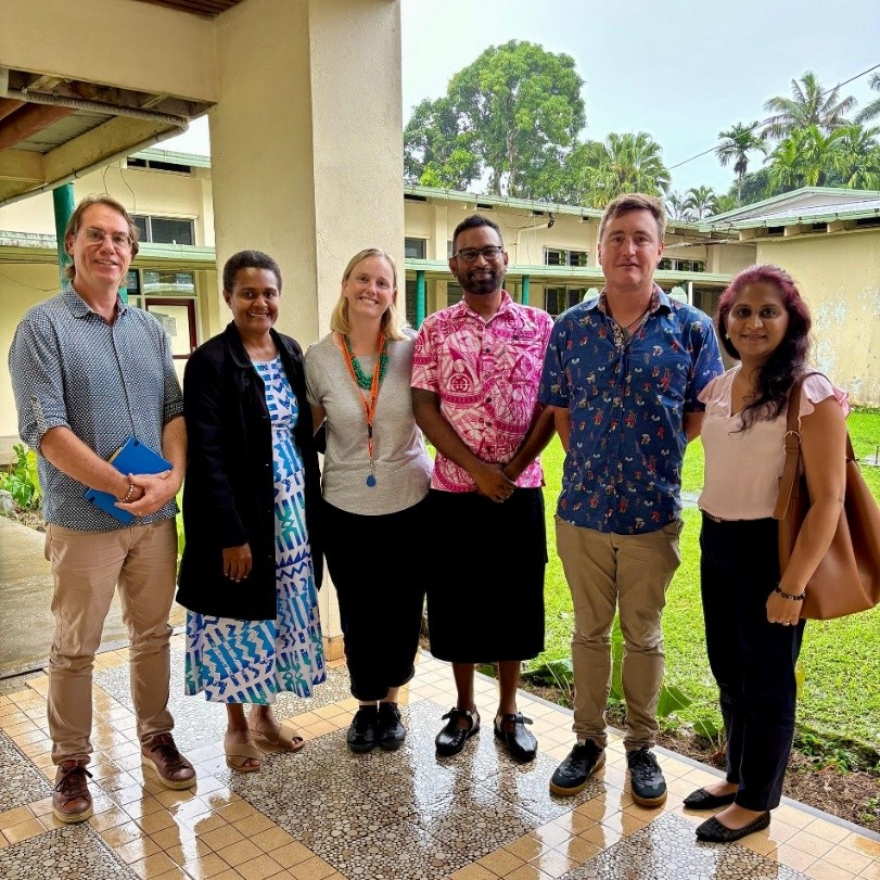
GOARN experts, Justine and Jonathan, at Twomey Hospital in Tamavua, Fiji. Credit: Ministry of Health and Medical Services.
For more information on WHO’s Global Outbreak Alert and Response Network, please click here: https://goarn.who.int/