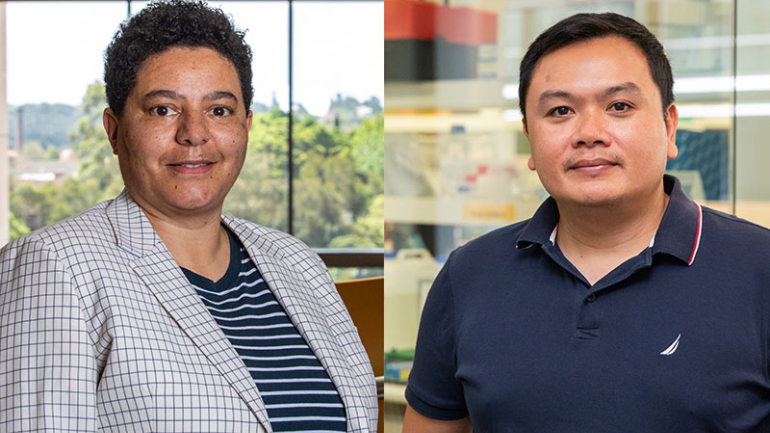


Associate Professor Lucette Cysique and Dr Chansavath Phetsouphanh from the Kirby Institute at UNSW Sydney have been awarded a total of $1,710,013 in funding through the Medical Research Future Fund’s (MRFF) Post-Acute Sequelae of COVID-19 grant opportunity.
Colloquially referred to as ‘long COVID’, Post-Acute Sequelae of SARS-CoV-2 (PASC) is an emerging health issue in Australia and internationally, with the potential to substantially impact individuals, communities and society through increased health care costs, economic burden, and productivity loss.
Predictors of PASC: International big data discovery and machine learning cross-validation in the Australian OUTcomes Post COVID (OUTPOST) cohort study was awarded $725,482.
The project, led by A/Prof Cysique, will aim to identify key factors contributing to the incidence and prognosis of long COVID in large international and national cohort studies. The project will benefit from The Collaborative on Fatigue and related symptoms Following Infection (COFFI) consortium which regroups a set of unique harmonised post-infective cohort studies and the APPRISE Long COVID Initiative, the Australian flagship post-infective cohort study.
“There is strong evidence to indicate long COVID is essentially another example of Post-Infective Fatigue Syndrome (PIFS). Like PIFS, the main symptoms of long COVID are fatigue, post-exertional malaise, cognitive difficulties, often referred to ‘brain fog’, sleep disturbance, and breathlessness,” says A/Prof Cysique.
“There is ongoing debate among community and some researchers about whether PIFS is the best framework for understanding long COVID. Our project will directly address this question, providing unique insights into similarities and differences in the syndromal conditions and identify common factors which impact prognosis.”
Other Kirby Institute Chief Investigators on the study include Dr Carolina Sandler, Dr Braulio M. Valencia Arroyo (formerly at Kirby Institute, now at International Centre for Future Health Systems), Dr Joanne Carson, and Professor Andrew Lloyd. The project has been co-designed with people who have lived experience of post-infective conditions.
Investigating biomarkers and driver mechanisms of Post-acute Sequalae of COVID-19 (PASC) was awarded $984,531.
The project, led by Dr Phetsuophanh, will seek to define biomarkers and driver mechanisms of long COVID.
“Understanding the pathogenesis of long COVID is crucial for developing rational and evidence-based therapies, which will ultimately help to alleviate the burden of disease caused by long COVID.” says Dr Phetsouphanh.
Other Kirby Institute Chief Investigators on the study include Scientia Professor Anthony Kelleher, Scientia Professor Gregory Dore and Dr Mark Donoghoe. Kirby Institute’s Professor Gail Matthews is an Associate Investigator on the grant.
This grant opportunity is being administered by NHMRC on behalf of the Australian Government Department of Health, Disability and Ageing. Further information on the MRFF’s Post-Acute Sequelae of COVID-19 Grant Opportunity are available here.