HBV POCT
Evaluation of a novel hepatitis B DNA test from capillary blood at the point-of-care as a tool to enhance clinical management
Expanding access to hepatitis B DNA testing is critical to improving hepatitis B care and achieving elimination goals.
Despite effective antiviral therapy, access to hepatitis B viral load testing remains a major barrier to care. Many people, particularly those living in rural and remote communities or experiencing barriers to specialist services, have limited access to molecular testing. Although around 69% of Australians living with chronic hepatitis B have been diagnosed, only 24% receive regular clinical monitoring and just 13% receive antiviral treatment.
Simplifying hepatitis B viral load testing through point-of-care technologies has the potential to improve linkage to care, support timely treatment decisions and help Australia progress towards hepatitis B elimination.
Quantitative hepatitis B (HBV) DNA tests currently require the collection of venous whole blood, which must be transported to centralised laboratories for testing. As a result, access to HBV DNA testing requires multiple visits at significant expense or is simply unavailable for many people living in remote or resource-limited settings.
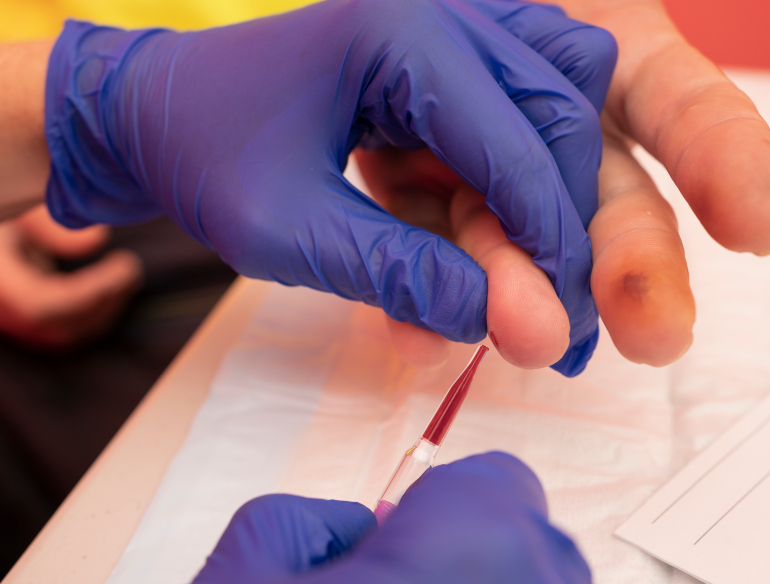
The study evaluated the Xpert® HBV Viral Load assay using fingerstick capillary blood compared with standard-of-care venous blood testing across six Australian hospital liver clinics. The study also evaluated the acceptability and future implementation potential of fingerstick HBV DNA testing.
Between November 2022 and June 2024, 268 participants were enrolled across six Australian liver clinics. A total of 246 participants were included in the final analysis.
- First published evaluation of fingerstick HBV DNA point-of-care testing.
- The fingerstick test accurately detected hepatitis B virus and correctly identified 95% of people above the viral load level used to guide treatment decisions.
- Minimal differences compared with standard laboratory testing.
- Supports decentralised hepatitis B testing and treatment.
St Vincent’s Hospital Sydney; Liverpool Hospital; Westmead Hospital; Blacktown Hospital; Prince of Wales Hospital; St Vincent's Hospital Melbourne.
Australian Government Department of Health.